Introduction
Imagine you’re chatting with an AI, and mid-conversation you ask it to pull up a design, book a hotel, or play a song, all without leaving the chat window. That’s the promise of “apps inside ChatGPT.” With OpenAI’s newer announcements, ChatGPT isn’t just a chatbox anymore, it is evolving into a platform where third-party services plug in directly.

In this post, we’ll unpack:
- What “apps in chat” means
- How it works under the hood
- Use cases and examples
- Challenges and risks
- What this could mean for you (designer, developer, or everyday user)
What Do We Mean by “OpenAI Apps in Chat”?
Until recently, ChatGPT interacted mostly via prompts, plugins, or APIs. But now, OpenAI is allowing developers to embed apps inside ChatGPT itself. The experience: you mention or trigger an app, ChatGPT invokes it, and you can interact with that app through natural language — the UI is blended into the chat interface. The Verge+1
For example, rather than switching to Spotify to create a playlist, you might type:
“Hey ChatGPT, open Spotify and make me a chill-vibe playlist for a rainy afternoon.”
And it responds with a playlist inside your conversation window. No context switching. No copying links.
To support this, OpenAI is releasing a ChatGPT SDK (preview mode currently) so external services can build these integrated mini-apps. The Verge
At launch, apps available include Booking.com, Canva, Coursera, Expedia, Figma, Spotify, and Zillow. The Verge+1 More are promised (DoorDash, Uber, Target, etc.) in upcoming weeks. The Verge+1
UPDATE
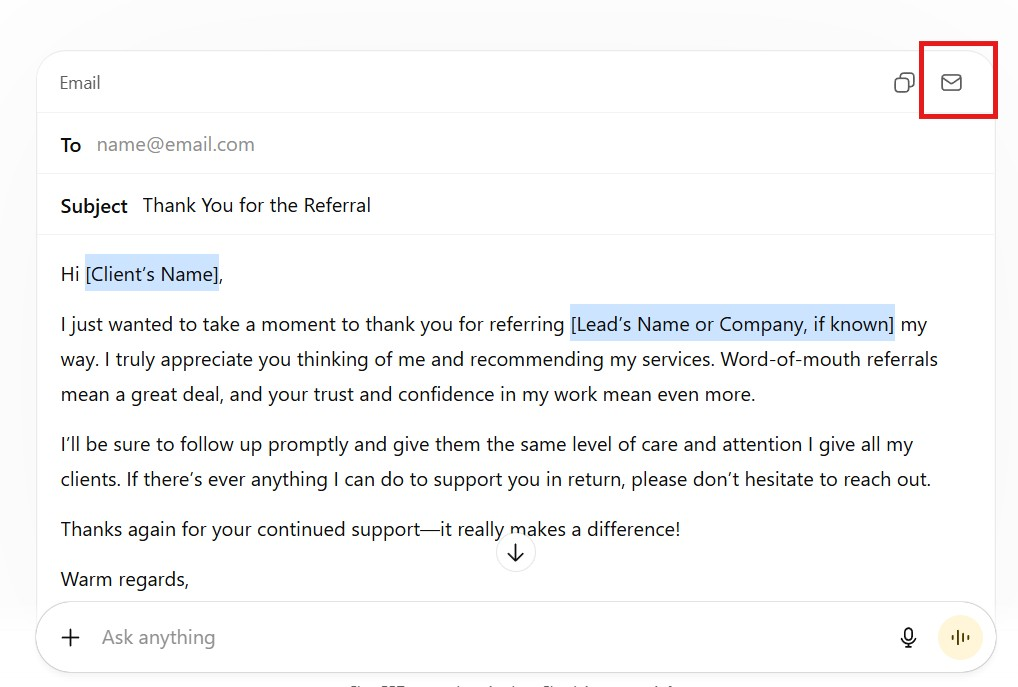
You can send emails directly from ChatGPT using the “Chat with Apps” feature, which integrates Gmail and Outlook into the chat interface. This feature allows you to compose, draft, and send messages seamlessly without leaving the conversation. Once connected, ChatGPT can access your authorized email account securely through encrypted authentication—meaning your credentials are never stored or visible to the model. Each session requires explicit permission, ensuring you maintain full control over what’s sent and to whom. Additionally, OpenAI’s connection uses OAuth (the same secure standard Google and Microsoft use), so you can safely manage emails while protecting your personal data and account integrity.
How It Works (Behind the Scenes)
How It Works (Behind the Scenes)
- SDK & API Layer
Developers use the ChatGPT SDK to wrap their service’s API so it can speak “ChatGPT language. - Invocation / Trigger
You type a message referencing an app (e.g. “use Canva to design a poster”), or ChatGPT suggests using an app based on your request. - Permission & Data Sync
The first time you use the app, you’ll be asked to authorize (what data the app can read/write). - App Execution in Context
ChatGPT passes context (your prior messages, any parameters) into the app. The app responds (e.g. a graphic preview), which is embedded inline. - Follow-up Conversation
You can tweak, ask questions, or chain tasks: e.g. “Now turn this poster into a social media reel.” - Monetization & Discovery
OpenAI is planning an app directory so users can browse, enable, or disable apps. Monetization models (subscriptions, pay-per-use) will be shared later. The Verge+1
Because it’s all inside ChatGPT, the UX feels seamless: you don’t need to leave the chat or manage multiple tabs or tools.
Use Cases & Real Examples

Here are some of the early and future ways this could change how people work or play:
Domain | Example Use Case | Why It Matters |
Design / Branding | “ChatGPT, open Canva and make me a logo for a modern bakery” | Designers can ideate, iterate, and export designs mid-chat |
Travel & Booking | “Show me hotels in Paris under $200/night” | ChatGPT can call Booking.com API & embed maps, filter options |
Learning & Education | “Enroll me in a Coursera course on UX design” | You can discover, preview, or enroll without leaving chat |
Real Estate | “Show me 3-bed homes in San Francisco” | Zillow integration can embed listings, maps |
Music & Entertainment | “Create a Spotify playlist for a summer road trip” | No app switching — you interact via conversation |
Commerce & Shopping | “Buy me this mug from Etsy” | OpenAI just launched Instant Checkout in chat for Etsy & soon Shopify. Reuters |
Chaining tasks is where this gets powerful. You could start by asking for logo ideas, pick one, ask to turn it into a social media post, then generate a copy deck — all without context loss or switching tools.
Challenges & Risks (the “Devil’s in the Details”)
As exciting as this is, there are several caveats and obstacles to watch out for:
- Quality & Trust
Not all apps will be built well—poor UI, buggy integration, or mismatch in context handling can lead to disappointing experiences. - Privacy & Authorization
With apps accessing your data or accounts, you need clarity on how data is used, stored, or shared. - Monetization vs. Free Use
Will certain apps be behind paywalls? Will OpenAI take revenue shares? There’s tension between open access and sustainability. - Discovery & Overload
As dozens or hundreds of apps flood in, how do users find the good ones? The app directory and curation will be key. Business Insider - Platform Risk / Lock-in
If your service depends on being inside ChatGPT, you risk being too tied to OpenAI’s policies or changes. - Latency & Performance
Every app invocation adds network/API call overhead. If things lag, the seamless illusion breaks. - Content & Moderation
When apps output content, ChatGPT must keep safety controls, prevent misuse, filter harmful content, etc.
What It Means for You (as Designer, Developer, or AI User) For Designers & Creatives
- You may become part of the early wave designing chat-embedded UIs (microinteractions inside conversation).
- You’ll need to think about conversational UX + minimal graphic output.
- Opportunity: design templates or “mini-apps” to wrap your services.
For Developers & Startups
- Building apps using the ChatGPT SDK is a new frontier—you’re not just building a web app, you’re designing for chat interaction.
- You need to handle conversational context, permission flows, chaining tasks.
- Monetization models will be a battleground (free vs premium features inside chat).
For Everyday Users
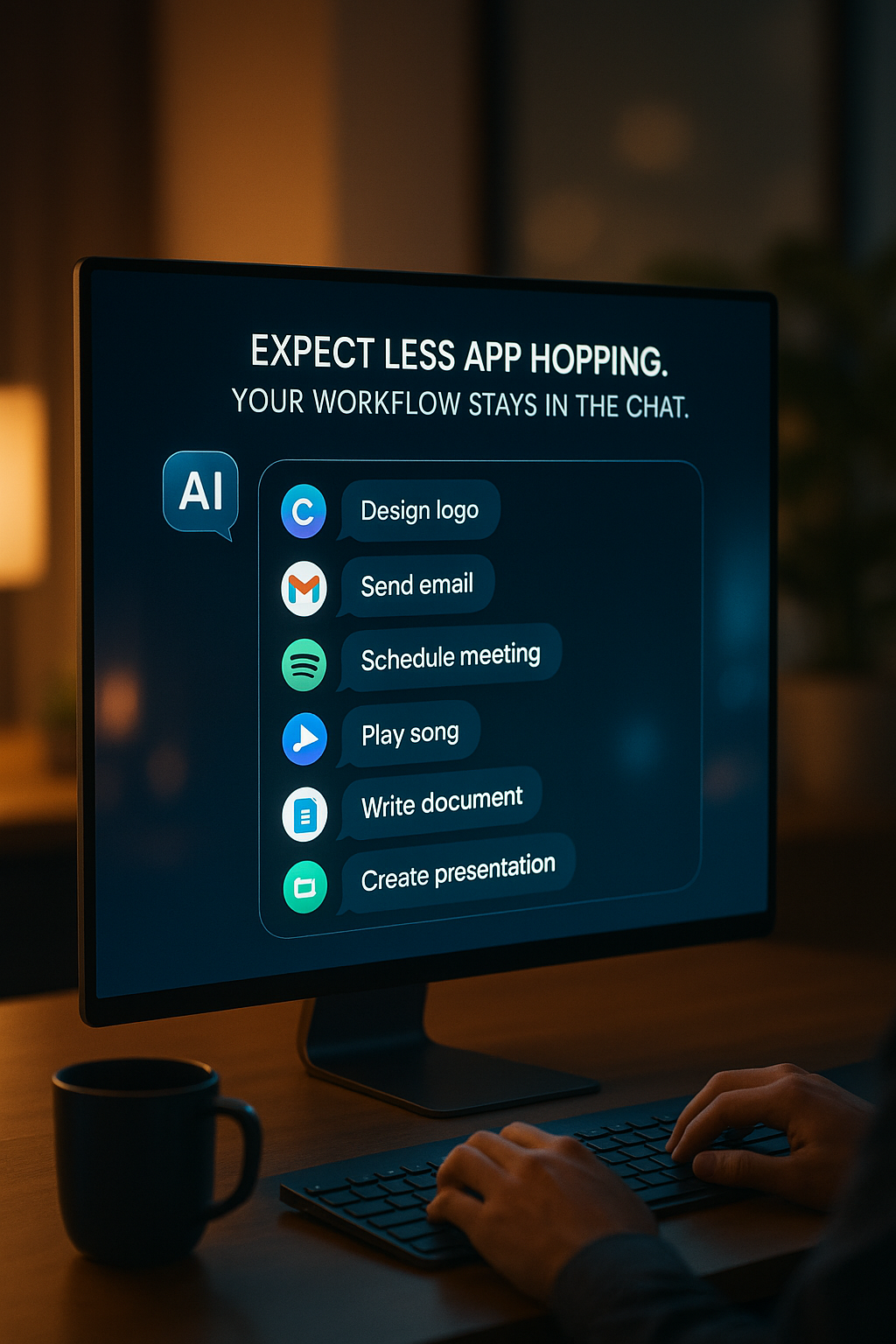
- Expect less app hopping. Your workflow stays in the chat.
- Learning curve: you’ll need to know what you can ask and what’s supported.
- Better productivity: you can iterate faster, launching mini-apps on the fly.

Future Outlook & Predictions
- App Store inside ChatGPT: expect a curated directory or “ChatGPT App Store” to surface best apps. Business Insider
- More vertical apps: niche tools like health diagnostics, finance, legal advice will adopt.
- AI Agent Evolution: ChatGPT may evolve into more autonomous agents that use multiple apps to solve tasks end-to-end.
- Cross-platform synergy: linking with desktop, mobile, IoT—using chat as the control center.
- Platform competition: OpenAI may become a serious competitor to Apple/Google app stores if adoption grows.
- Standardization & API wrappers: we might see a protocol standard for “chat-embedded apps” that many LLMs adopt.
Conclusion
The notion of “apps in chat” ushers in a new paradigm: interactions become fluid, tool switching becomes optional, and the conversational layer becomes your interface to countless services. For creators, the canvas shifts: you’re designing within language. For users, the promise is less friction, more context, and faster execution.
If I were writing this post as your AI collaborator, I’d suggest embedding a live demo (screencap or video) showing a sample conversation invoking an app (say, generating a poster via Canva inside chat). That visual helps readers grasp the “magic moment” — when chat and app become one.
If you like, I can customize this post for your blog’s tone, add code snippets (for dev audience), or suggest promotional headlines. Want me to shape it further?
— Final Thoughts
If chat is the new operating system, in-chat apps are the icons on your desktop—ready the moment you speak. The shift isn’t about novelty; it’s about removing friction so ideas move straight from prompt → prototype → publish in a single thread. That’s creative flow, not just convenience.