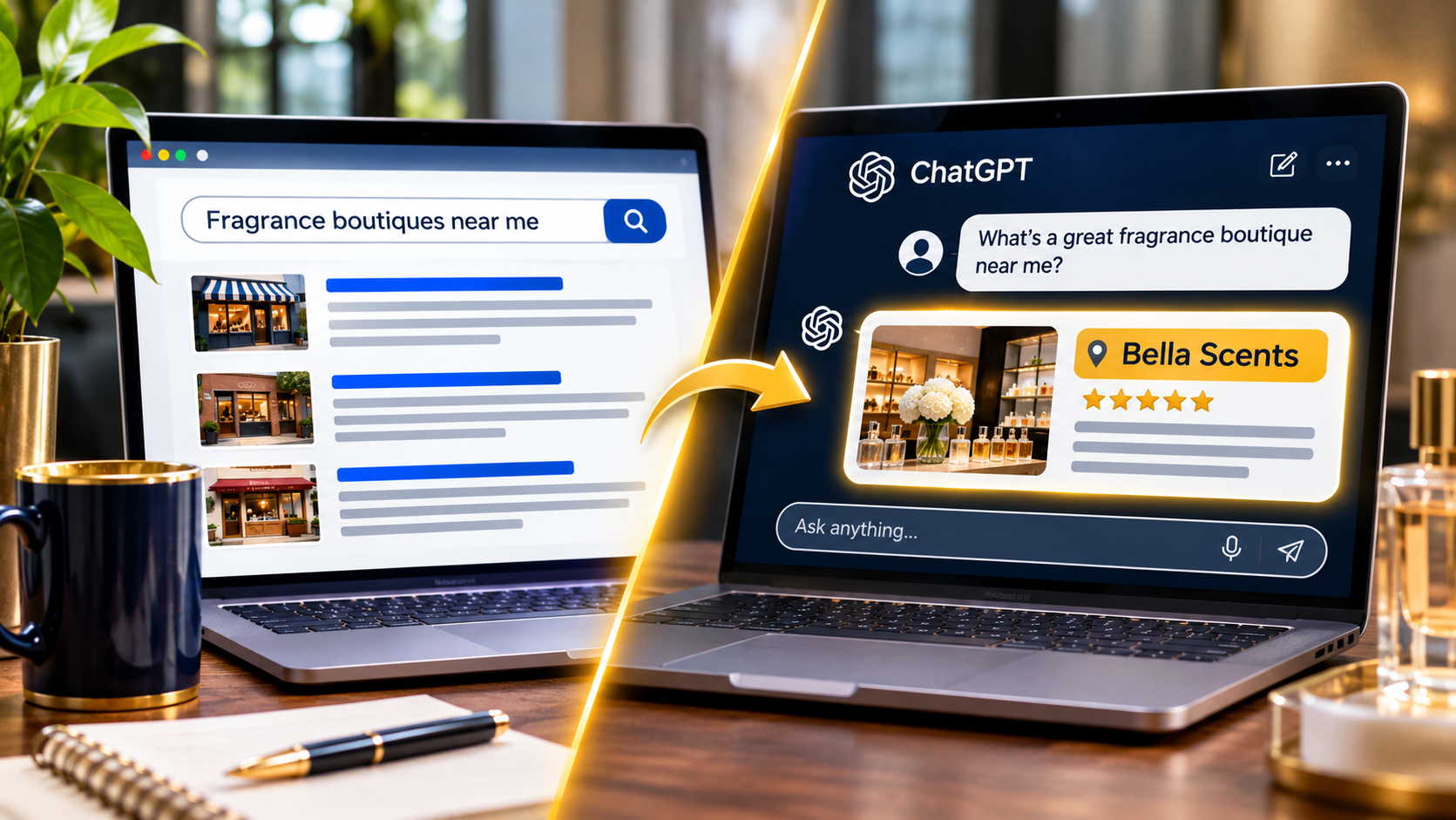
Your customers are changing how they search. Instead of typing “graphic designer near me” into Google and scrolling through ten links, more people now ask ChatGPT, Gemini or Perplexity a full question, such as “Who’s a good designer for a small bakery logo?” The AI gives one answer, often with just a few names.
If your business isn’t in that answer, you’re invisible to that customer. The good news: most small businesses haven’t caught on yet, so there’s a real chance to get ahead.
What is AI search optimization?
You may hear it called GEO (generative engine optimization) or AEO (answer engine optimization). The idea is simple. Traditional SEO helps your website rank in a list of search results. GEO helps your business get mentioned, cited or recommended inside the answers AI tools give.
It isn’t a replacement for SEO. AI tools still lean heavily on websites that search engines already trust. Think of GEO as SEO with a new goal: being the answer, not just a link.
Why this matters right now
The gap is wide open. A Bluehost survey found that only 13% of small businesses are actively optimizing for AI search. A Squarespace survey of more than 1,000 owners found nearly 6 in 10 don’t know where to start, and over two-thirds have never checked how their business shows up in AI answers.
That means a few simple changes can put you ahead of most of your competitors.
6 steps to get your business into AI answers
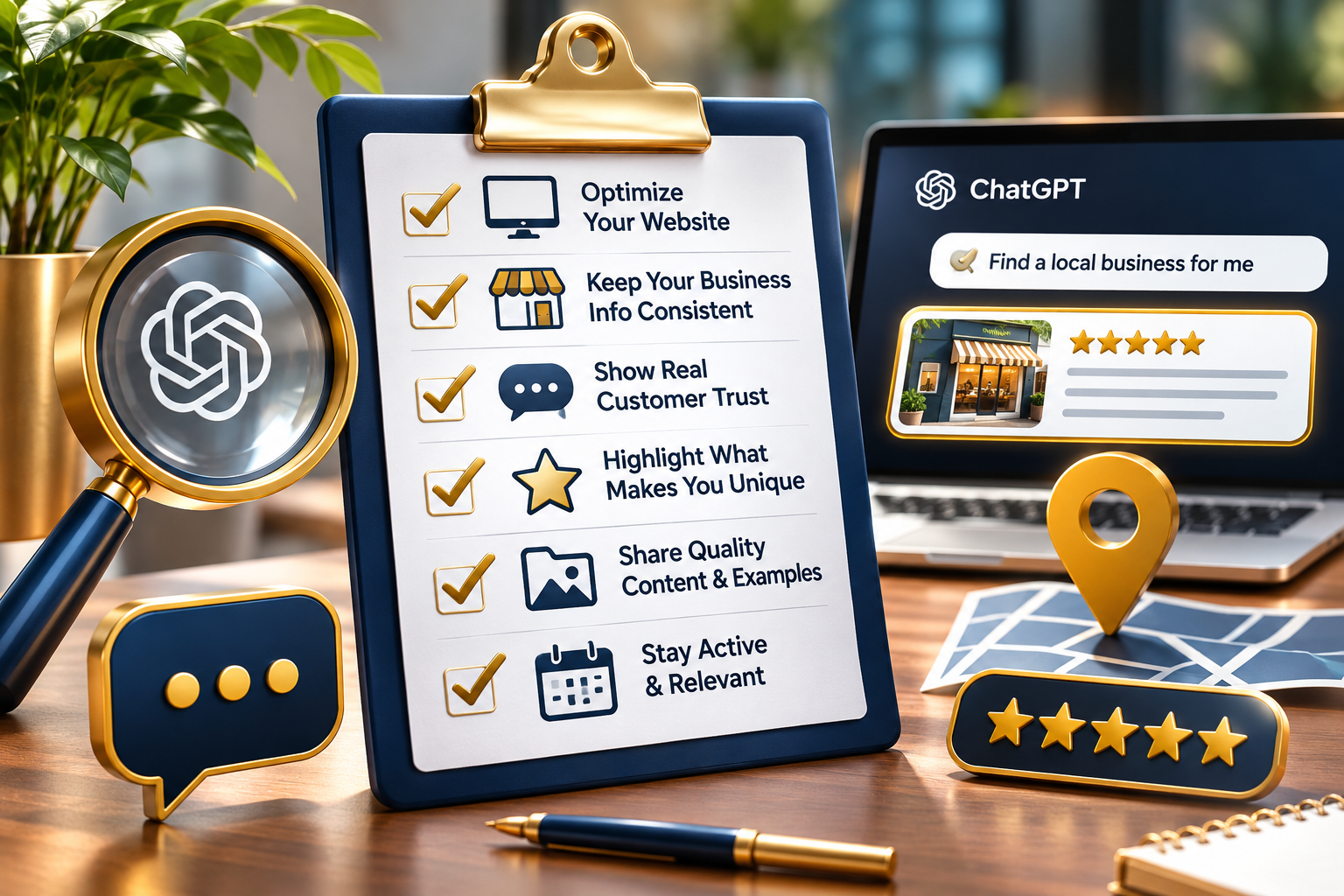
1. Ask the AI about yourself. Open ChatGPT, Gemini and Perplexity. Ask questions your customers would ask, like “best wedding florist in [your city].” Then ask directly: “What do you know about [your business name]?” Write down what’s right, what’s wrong and what’s missing.
2. Say exactly what you do, in plain words. AI tools read your site like an outline. Your homepage and service pages should clearly state who you are, what you offer, who you serve and where. “We help small businesses look professional” is vague. “Kynice Designs creates logos, brand kits and e-commerce websites for small businesses” is clear.
3. Add FAQ sections. AI tools love direct questions with direct answers. Add a short FAQ to each service page: “How much does a logo cost?” “How long does a website take?” Answer each in two or three sentences.
4. Make your listings match everywhere. AI pulls from across the web, including Google Business Profile, Yelp, industry directories, Facebook and Instagram. Your business name, address, phone, hours and description should be identical on every one. Mismatched info makes AI less confident about recommending you.
5. Show proof of real work. Case studies, portfolio pieces with short write-ups, client testimonials and before-and-after photos all signal that you’re legitimate. A page titled “How we rebranded a local coffee shop” gives AI something specific to reference.
6. Keep it fresh. Set a reminder every three months to update your services, prices, photos and FAQs. Outdated info can make AI give wrong answers about you, or skip you entirely.
Your website’s design matters too
A well-built website helps both humans and AI. Clear headings, fast load times, mobile-friendly layouts and organized service pages make it easy for AI tools to understand your business. A cluttered site with vague copy makes it hard.
The bottom line
AI search is the new front door for customers. You don’t need to be a tech expert to show up there. You need a clear, honest, well-organized website and consistent information across the web.
Not sure if your website is AI-ready? Kynice Designs builds clean, modern websites designed to be found by people and AI alike. Contact us to talk about your site.